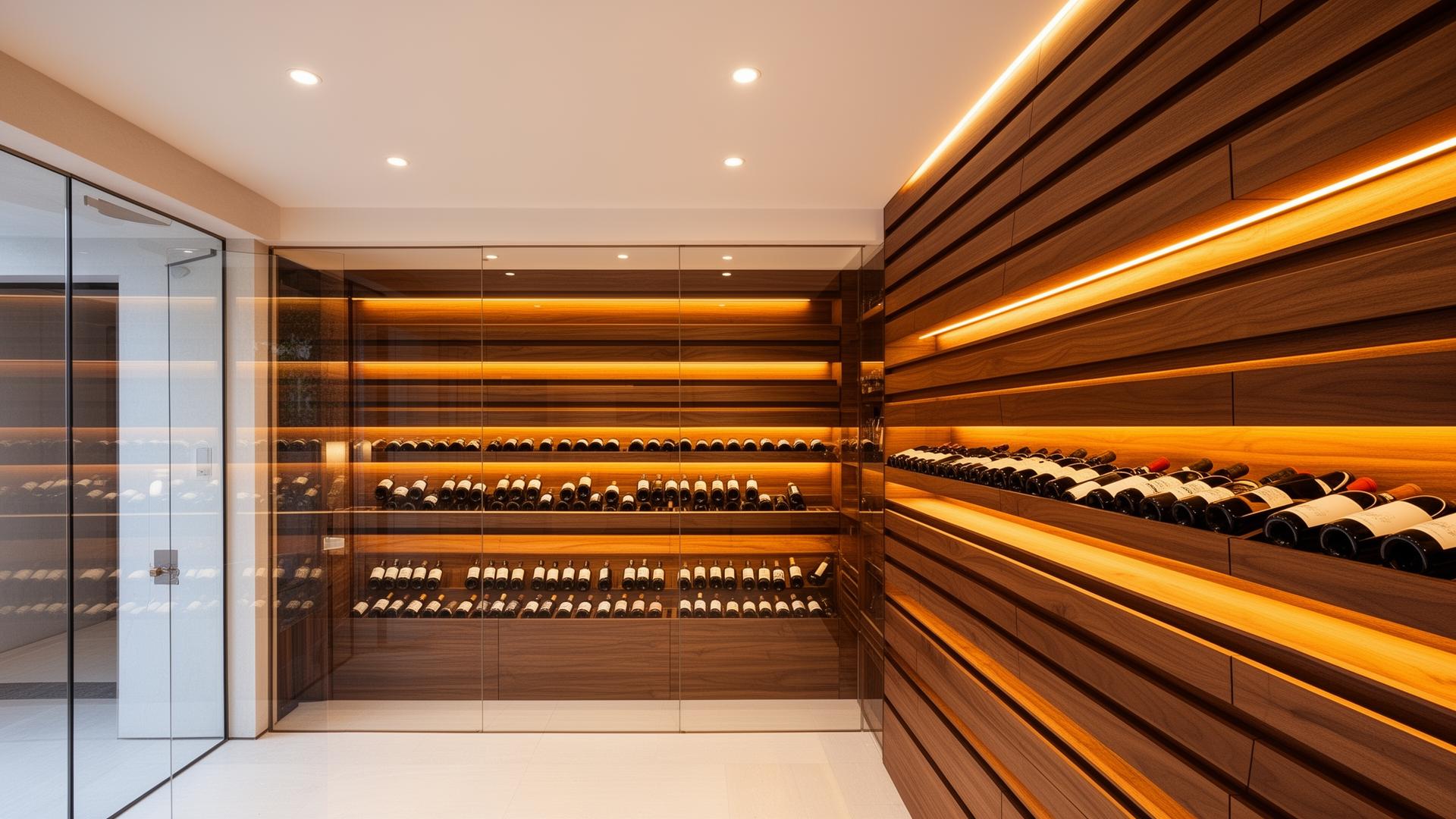
Collection-First Cellar Assessment
Most cellars start with the room. We start with the collection.
Before major design, renovation, organization, or storage decisions are made, Cooper Private Cellars evaluates the collection itself — how it is built, how it is growing, how it is stored, and what the future cellar actually needs to support.
Private Cellar Assessments start at $750. Final scope reflects the collection and project requirements.
Independent. Sommelier-led. Collection-first.
The Problem
A beautiful cellar can still be the wrong cellar.
A cellar can look exceptional and still fail the collection — if usable capacity is wrong, bottle formats are overlooked, display consumes needed storage, inventory is unreliable, or the design reflects only what the client owns today rather than where the collection is headed.
Theoretical capacity vs. usable capacity
A bottle count on a drawing is not the same as the capacity a working collection can actually live in. Access, circulation, reserve space, and everyday use consume more of a cellar than most plans account for.
Champagne, Burgundy, magnums, cases and special formats
Bottle geometry decides how a cellar performs. Collections weighted toward Burgundy, Champagne, large formats, or full cases behave very differently inside racking designed around a standard Bordeaux bottle.
Collection growth over 3–5+ years
A cellar designed for what is owned today is often full before the project settles. Acquisition pace, allocations, futures, and gifting all belong in the capacity conversation early.
Retrieval, organization and inventory confidence
If a bottle cannot be found without moving other bottles, the cellar is working against the collector. Organization and inventory confidence are design outcomes, not afterthoughts.
Design decisions made without a wine-side brief
Display, glazing, sightlines, and millwork are frequently resolved before anyone has defined what the collection requires. The result is a room that photographs well and stores poorly.
The assessment exists to identify those issues before they become expensive decisions.
Methodology
The Collection-First Method
Collection
What you own and how you collect — regions, formats, drinking windows, entertaining patterns, and acquisition behavior.
Capacity
What the cellar needs today, and where the collection is realistically headed over the next several years.
Storage
Bottle formats, cases, display allocation, accessibility, and functional zoning across the space.
Risk
Capacity, organization, environmental, and project-design concerns identified and prioritized.
Roadmap
Clear priorities for the collector and, where relevant, the architect, designer, or builder.
The room is evaluated through the lens of the collection — not the other way around.
What You Receive
A strategic brief, not a generic inspection.
Private on-site collection and cellar review
Collector profile and collecting-behavior assessment
Capacity and collection-growth analysis
Bottle-format and storage-allocation review
Organization, retrieval and inventory-system review
Environmental observations and risk flags
CPC risk register with priority findings
Project-Team Collector Brief
Written Collection-First recommendations
Private review of findings and recommended next steps
Bottle-by-bottle manual inventory is a separate scope when required.
Who It's For
When CPC is most useful
Planning a new cellar
Renovating or expanding an existing cellar
Collection has outgrown current storage
Building or remodeling a home
Wine is spread across multiple storage locations
Cellar is beautiful but difficult to use
Inventory or bottle-location confidence is low
Architect or design team needs a clear wine-side brief
Why CPC
Independent by design.
The architect understands the space. The builder understands construction. The racking and climate specialists understand their systems. CPC represents the collection.
We do not begin by selling the room a product. We begin by understanding the wine, the collector, and the requirements the project must satisfy.
Sommelier-Led
Founded and led by Ivo Cooper, a sommelier working from the collection outward.
Advisory Only
CPC advises, specifies, and coordinates. Construction and licensed trade work stay with qualified professionals.
Serving Los Angeles
Private clients and trade partners across Los Angeles and Southern California.
The Engagement
What the engagement looks like
Private Intake
Existing inventory, plans, project context and priorities.
On-Site Assessment
Collection, storage, organization, formats, environment and use.
Analysis
Capacity modeling, growth, risks and collection requirements.
Report
Collection-First Assessment and Project-Team Collector Brief.
Private Review
Findings, priorities and recommended next steps.
Typically delivered within 10 business days after the required collection information and the on-site assessment are complete.
The Report
See what the assessment becomes.
The finished report translates the collection into clear requirements, priorities and decisions the collector — and, when relevant, the architect or design team — can act on.
Document
Sample Collection-First Assessment Report
Begin Privately
Before you design the cellar, understand the collection.
If you are planning a new cellar, expanding an existing one, or want to know whether your current storage is actually serving the collection, begin with a private conversation.
Already booked? Complete your private intake
Collection First. Cellar Second.