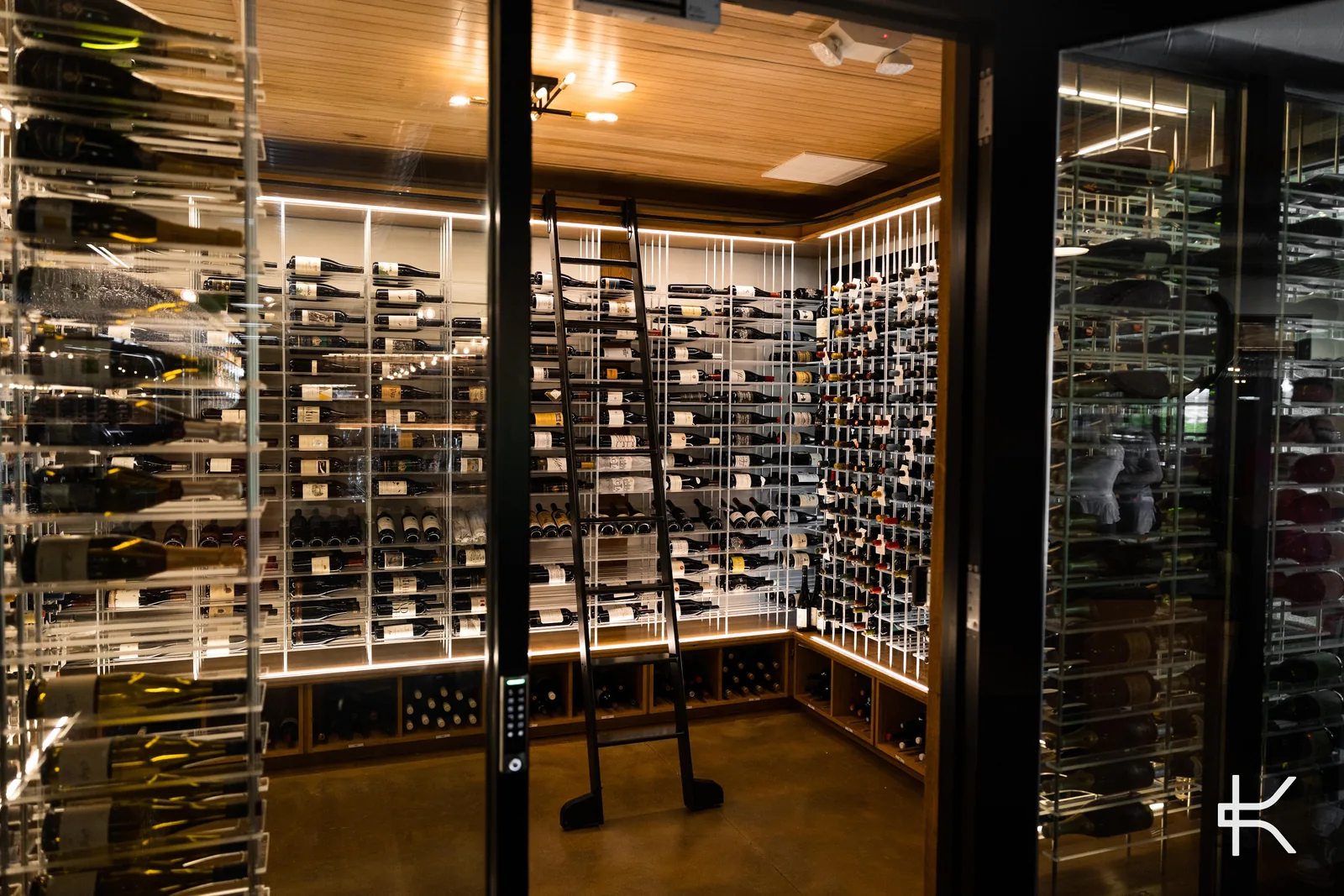
A homeowner says, “We need a wine cellar for 2,000 bottles.”
That sounds like a highly specific design requirement. It is not.
It tells us quantity, but it does not yet tell us what kind of collection needs to live there.
Two collectors can each own 2,000 bottles and require very different spaces. One may buy mostly Bordeaux-format bottles by the case and hold them for years. Another may own substantial Burgundy and Champagne, magnums, original wooden cases, presentation boxes and a constantly changing mix of auction and allocation purchases.
Same bottle count. Different physical collection.
That distinction matters because a wine collection is not standardized inventory. Bottle dimensions vary. Large formats change the geometry quickly. Original cases and presentation boxes consume space differently from individual bottles. Some collectors want dense storage; others want important labels visible. Some need quick daily access, while others are building a long-horizon collection intended to evolve over decades.
Bottle count is therefore an important starting point — but it is not a complete design brief.
Capacity Is Not the Same as Collection Fit
A cellar can meet its stated bottle capacity and still be poorly suited to the collection.
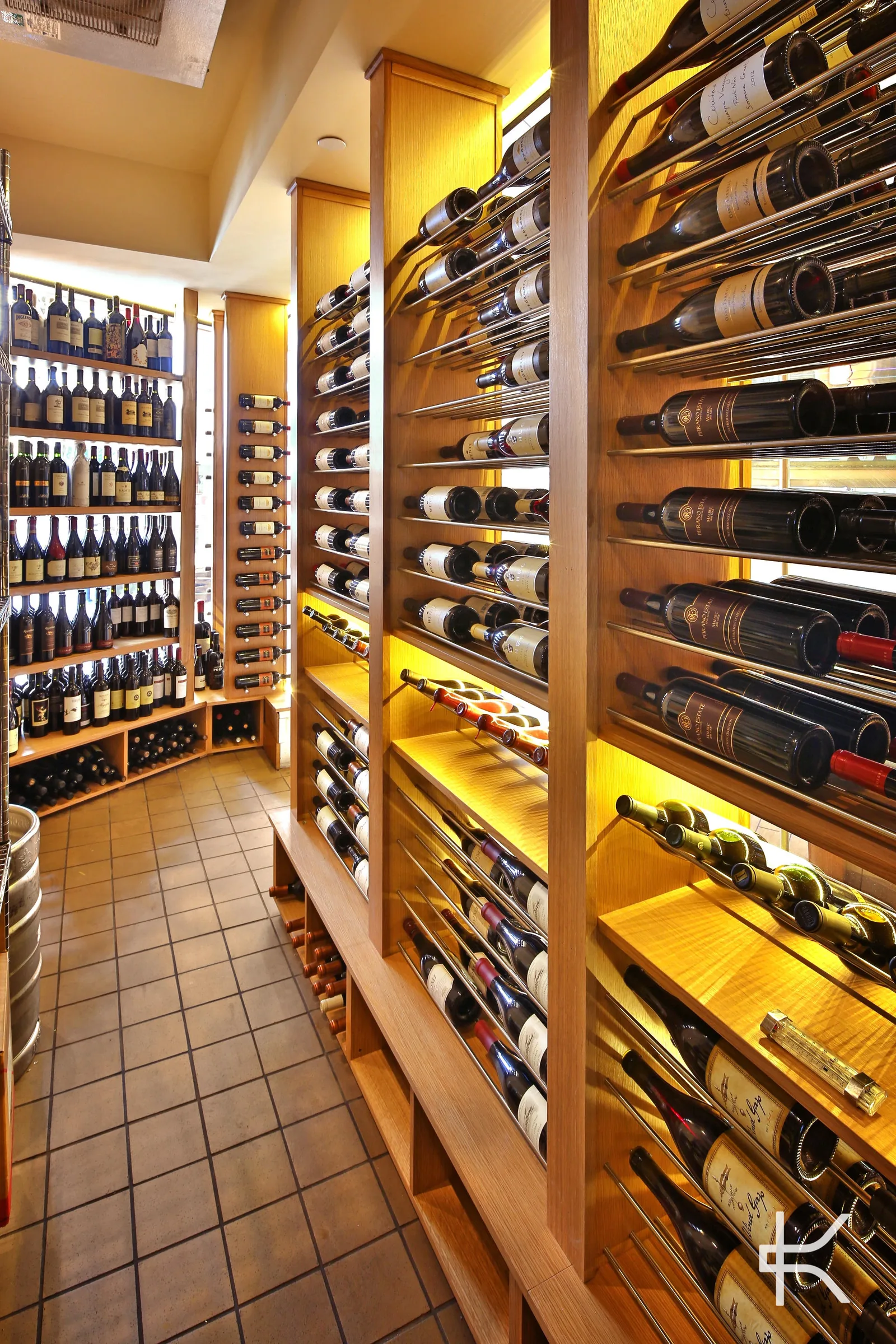
The problem usually appears in small operational frictions. A magnum has nowhere sensible to go. Champagne bottles consume more room than expected. Original cases are pushed into circulation paths. Frequently opened wines sit behind bottles intended for long aging. The collector technically has enough storage, but using the cellar becomes increasingly inconvenient.
This is why I think of capacity as only one dimension of cellar planning. The better question is not simply, “How many bottles fit?” It is, “Will the right bottles fit the right way?”
The answer depends on the collection itself.
Seven Questions Before Design Is Finalized
Before difficult-to-change decisions are made around racking, millwork, glass, cooling and layout, I want to understand seven things.
1. What does the client actually own?
A bottle count is useful, but the collection profile matters more: regions, producers, bottle formats, original cases and special packaging.
2. Which bottle formats dominate?
Bordeaux, Burgundy, Champagne and large formats do not occupy identical space. A cellar planned around one “standard bottle” can become less functional as the real collection moves in.
3. How does wine enter the collection?
A collector who buys six- or twelve-bottle cases behaves differently from someone purchasing individual bottles, allocations, auction lots or large formats.
4. How quickly is the collection growing?
A cellar should not only fit the collector today. It should accommodate the collector they are becoming.
5. How is the wine selected and consumed?
Daily-access bottles, entertaining wines, long-term holdings and high-value bottles may deserve different storage or access strategies.
6. Who needs access?
The owner may not be the only person retrieving wine. A spouse, household staff, sommelier or estate manager may also need to find bottles efficiently and confidently.
7. What should the collection become over the next decade?
The most successful cellars are not static containers. They are living systems built around a changing collection.
The Wine Specialist Should Not Replace the Designer
None of this means a wine specialist should take over the architect’s or interior designer’s role.
Quite the opposite.
The architect owns the architecture. The designer owns the interior language. Mechanical professionals address the environmental system. Cellar fabricators and storage specialists bring their technical expertise.
The collection-side specialist contributes a different layer: enough information about the wine and the collector to help the rest of the team make better-informed decisions.
There is information a client may not know to volunteer early in the design process. They may know they own approximately 2,000 bottles, but not realize that the format mix, original cases, acquisition patterns, access habits or future growth materially affect the way the room should function.
The goal is not to complicate the project. It is to surface those questions early, while the answers are still inexpensive to act on.
A Beautiful Cellar Can Still Be the Wrong Cellar
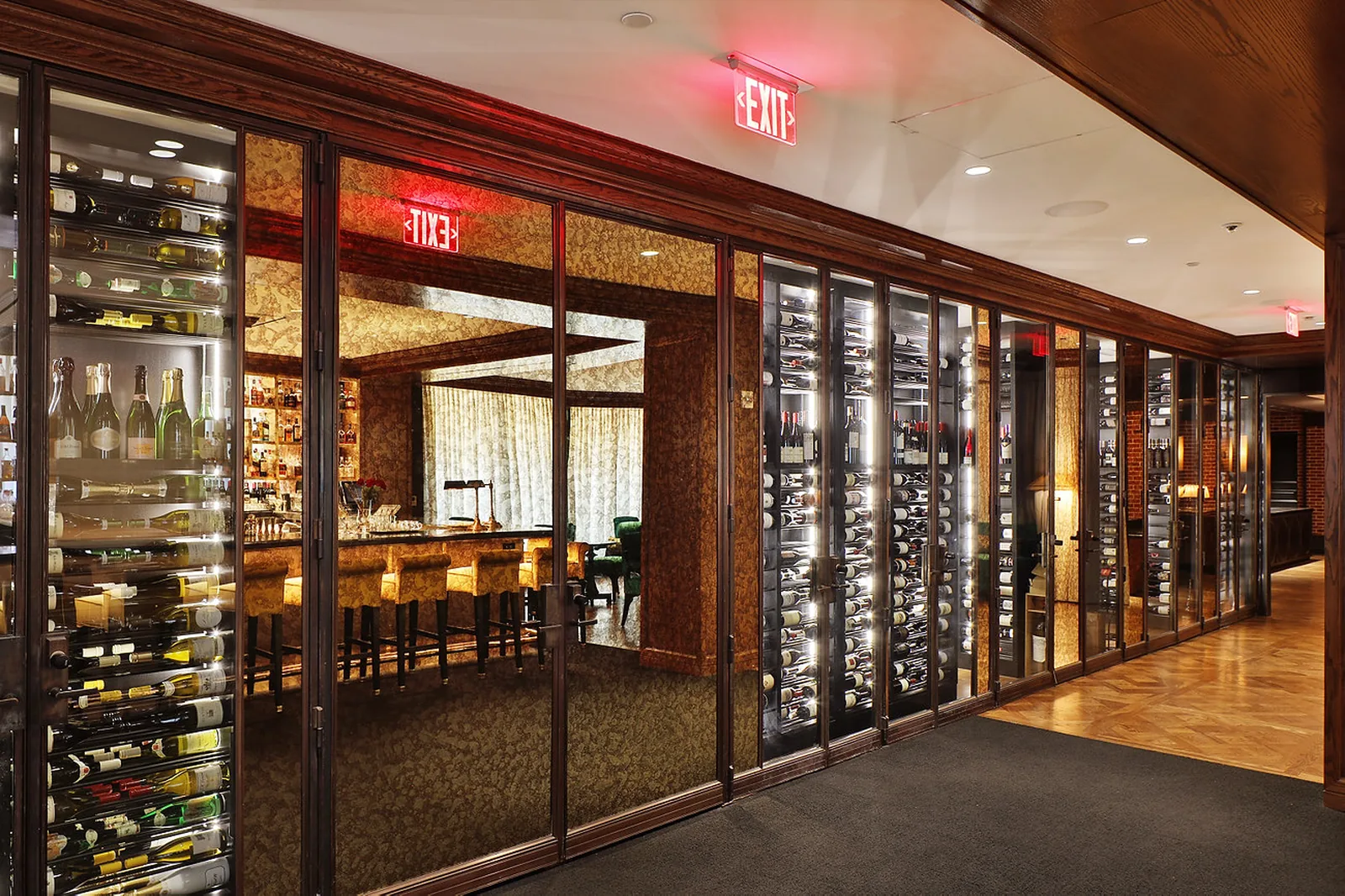
Wine cellars are increasingly integrated into the visible parts of a home: dining rooms, kitchens, entertaining spaces, corridors and living areas. That makes aesthetics more important, not less.
But visibility raises the standard. A successful cellar should look right, protect the wine, fit the collection, make bottles easy to retrieve, work for the household and continue to function as the collection evolves.
A beautiful room that creates friction every time the collector wants a bottle is not finished simply because the millwork is finished.
The strongest cellar is both architectural and operational.
That is the principle behind my work at Cooper Private Cellars:
Collection First. Cellar Second.
Next Step
Understand the collection before the room is drawn.
Begin with a Collection-First Cellar AssessmentAbout the Author
Ivo Cooper is the founder of Cooper Private Cellars, a Los Angeles-based wine collection advisory and cellar-planning practice focused on collection-led cellar design, organization and long-term stewardship. Drawing on more than two decades of wine-program and hospitality leadership, Cooper works at the intersection of wine, collection operations and the residential-design process.
Project photography is courtesy of Kessick Wine Cellars. The pictured projects are not presented as Cooper Private Cellars design or installation work.
Related CPC resources